If you have a severely damaged or infected tooth, Qdentala offers a simple way to protect your natural smile with modern root canal treatment in Kukatpally. people worry that a root canal will be painful, but today's dental techniques and local anesthesia make the procedure much more comfortable. Instead of removing an infected tooth, root canal treatment can help save it, restore its function, and prevent the infection from spreading.
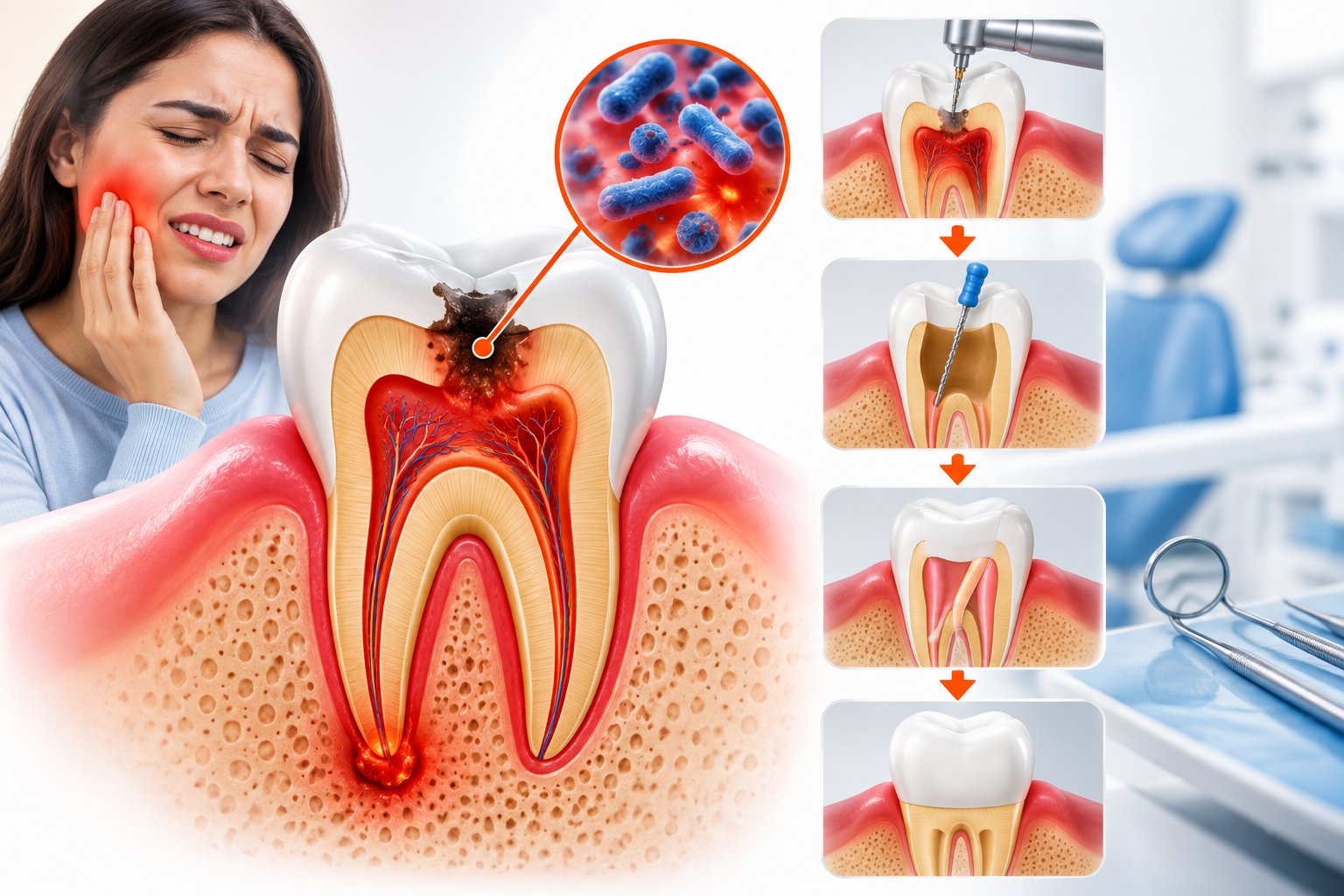
A root canal is a dental procedure used to treat infection or inflammation inside a tooth. The
inner part of the tooth, called the pulp, contains nerves and blood vessels. Deep decay, cracks,
trauma, or repeated dental procedures can damage this area and allow bacteria to cause an
infection.
During treatment, the dentist carefully removes the infected pulp, cleans and disinfects the
root canals, and seals the tooth. A dental crown
may then be recommended to protect the treated
tooth and restore its strength.
Not every toothache requires a root canal. However, certain symptoms may indicate that the pulp
is infected or seriously damaged.
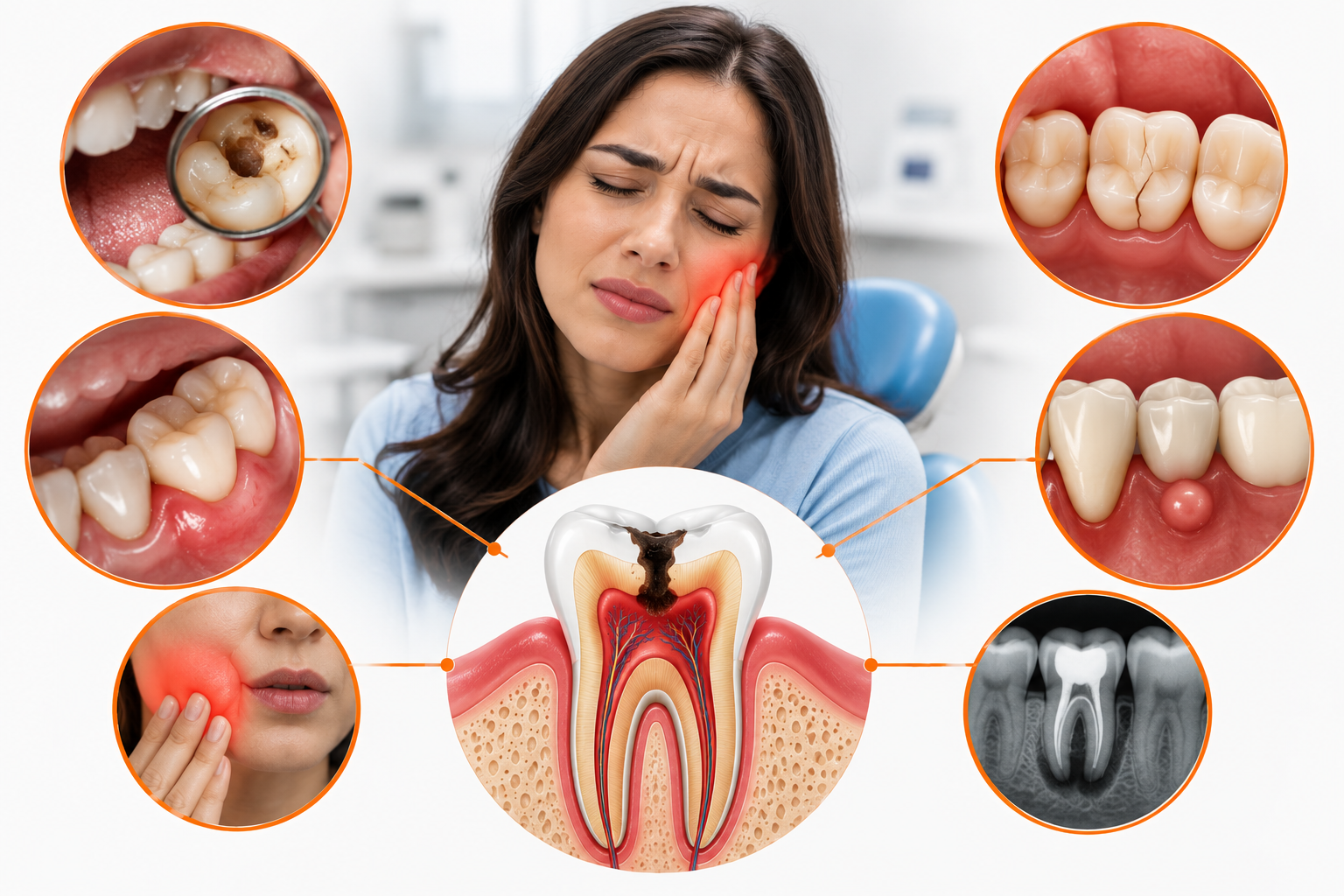
Common warning signs include:
Persistent or severe toothache
Pain while biting or chewing
Sensitivity to hot or cold that lingers
Swelling around the tooth or gums
A darkened or discoloured tooth
One of the biggest myths about root canal treatment is that it is extremely painful. In reality,
the procedure is performed under local anesthesia, so you should not feel significant pain while
the dentist is treating the tooth.
You may experience mild soreness or sensitivity after the procedure, particularly for a few
days. Your dentist can recommend appropriate care to help manage any discomfort. Treating the
infection itself can often provide relief from the persistent pain caused by the damaged tooth.

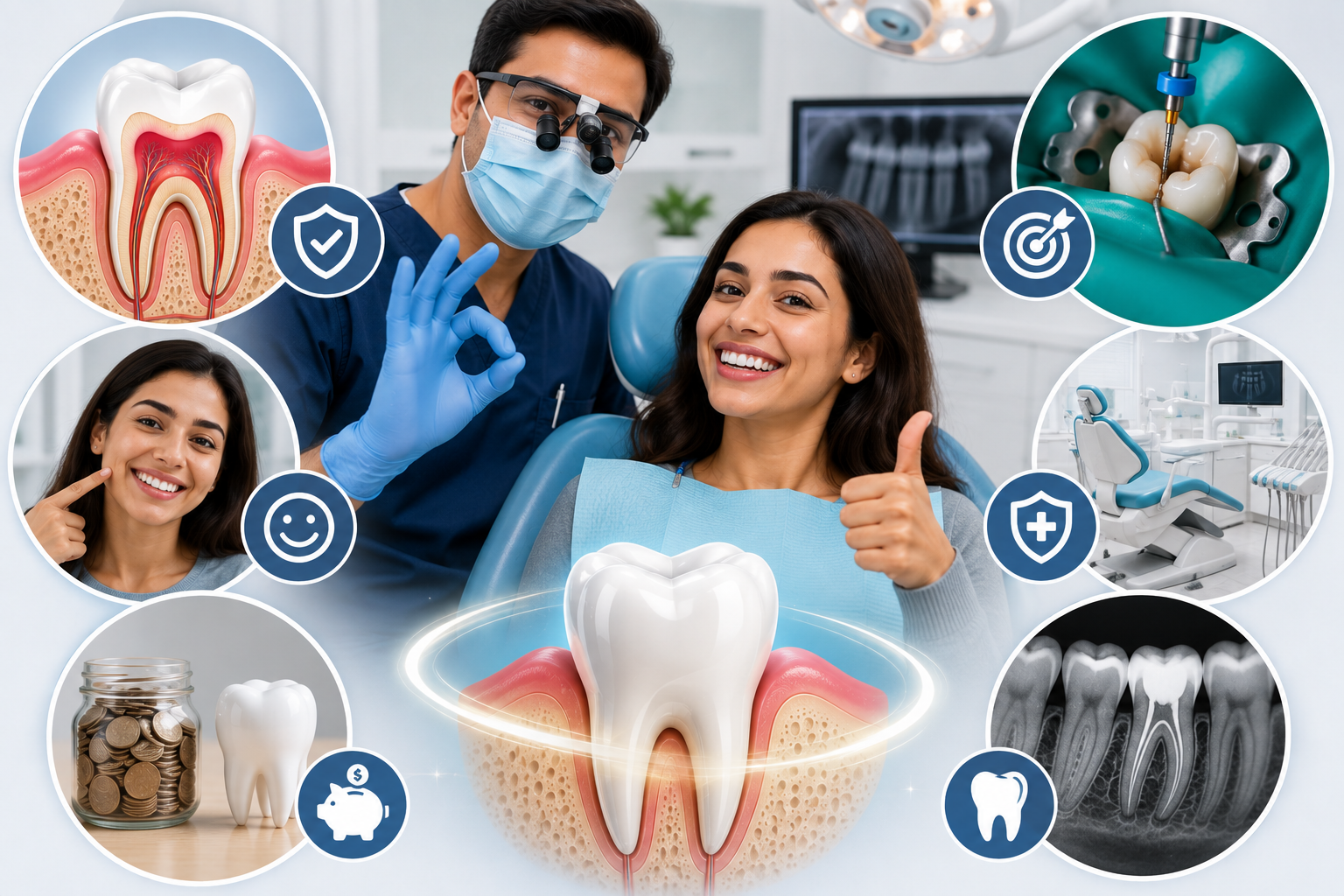
Choosing root canal treatment instead of extracting a badly infected tooth can have several
advantages:
Saves Your Natural Tooth
Keeping your original tooth can help maintain your natural bite and reduce the need for tooth
replacement.
Restores Normal Function
After the tooth is properly restored, you can generally use it for normal chewing and everyday
activities.
Prevents the Infection From Spreading
Removing infected pulp and sealing the canals helps eliminate the source of infection and
protects surrounding tissues.

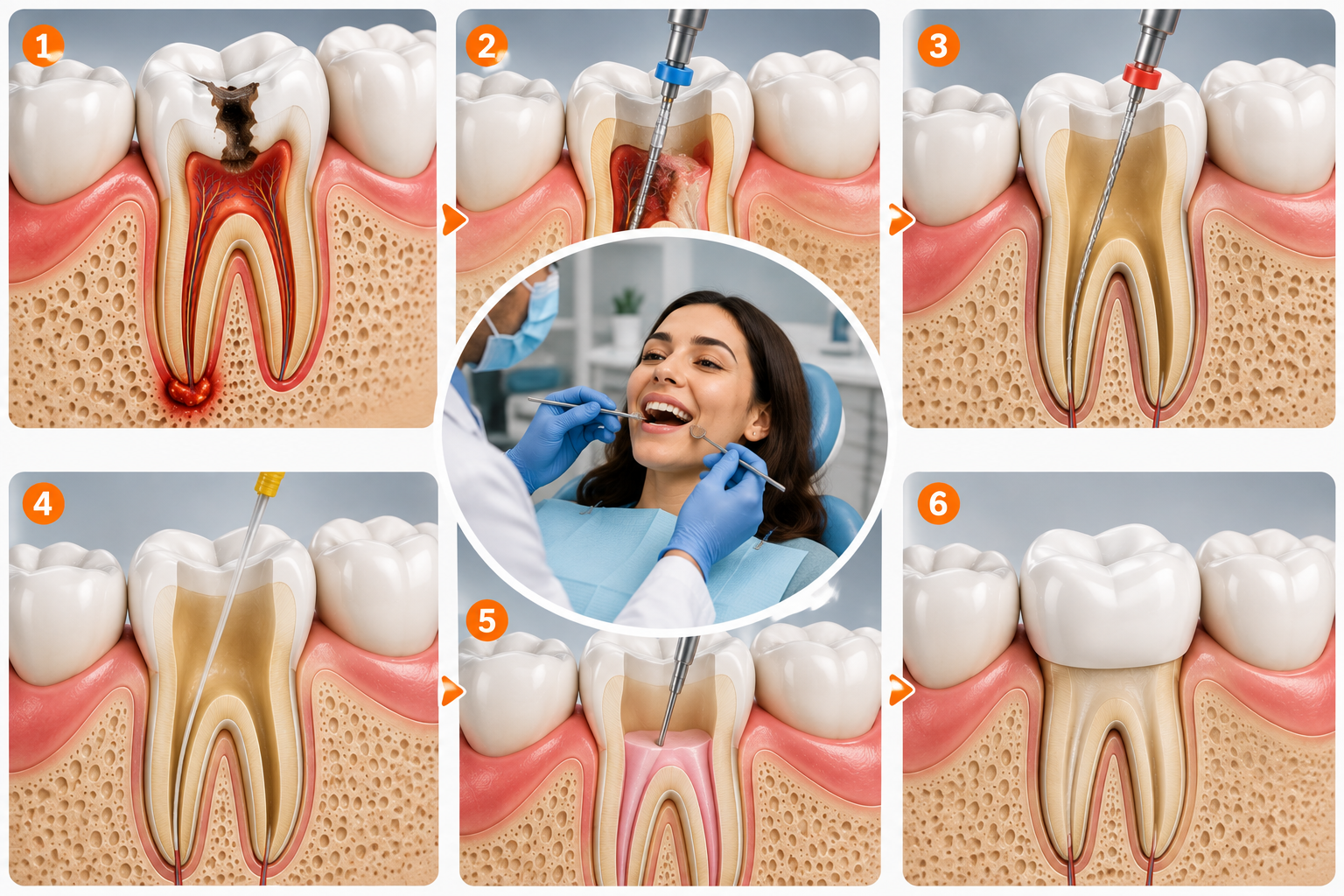
A typical root canal treatment involves these steps:
Examination: The dentist evaluates the tooth and may take an X-ray to understand the
extent of
the infection.
Anesthesia: Local anesthesia is used to keep the procedure comfortable.
Cleaning: The infected or damaged pulp is removed.
Disinfection: The root canals are carefully cleaned and shaped.
Sealing: The canals are filled and sealed to prevent further infection.
Restoration: A filling or dental crown may be placed to protect the tooth.
Proper care can help your treated tooth remain healthy for many years.
Brush twice a day with fluoride toothpaste.
Floss or clean between your teeth every day.
Avoid chewing very hard foods until the tooth has been fully restored.
Follow your dentist's instructions after treatment.
Visit your dentist regularly for check-ups and professional cleaning.
A root canal-treated tooth still needs good oral hygiene because the surrounding gums and teeth remain
vulnerable to decay and gum disease.

A timely dental evaluation can make a major difference when a tooth is infected. Delaying treatment may allow the infection to worsen and potentially lead to an abscess or tooth loss. If you are experiencing persistent tooth pain, sensitivity, swelling, or discomfort while chewing, consult a qualified dentist. Early diagnosis can help determine whether laser root canal treatment in Kukatpally is the right solution for your tooth.
A damaged or infected tooth does not always have to be removed. Root canal treatment in Kukatpally can help eliminate infection, relieve dental discomfort, and preserve your natural tooth. If you have symptoms such as persistent tooth pain, swelling, or sensitivity, getting a timely dental assessment is an important first step. Contact Us to learn more about your treatment options and take the next step toward a healthier, pain-free smile.
Depending on the tooth and severity of infection, treatment may take one or more appointments. Your dentist can provide a more accurate estimate after an examination.
Yes. When the tooth can be restored, root canal treatment can remove the infection and help preserve the natural tooth.
With proper oral hygiene, regular dental visits, and suitable restoration, a treated tooth can remain functional for many years.
You may need to avoid chewing on the treated tooth until the final restoration is completed. Follow your dentist's specific advice.
When a tooth can be successfully restored, preserving the natural tooth is often preferable to extraction because it helps maintain normal chewing and tooth alignment.